
The leadership styles of Prophet Muhammad (SAW), Jesus Christ, and Gautama Buddha are among the most influential in human history, and they quintessentially epitomized the concept of Sublime Leadership. While they emerged in different cultural, historical, and religious contexts, their leadership shared profound commonalities rooted in spiritual wisdom, ethical strength, and human transformation. Here’s a comparative breakdown:
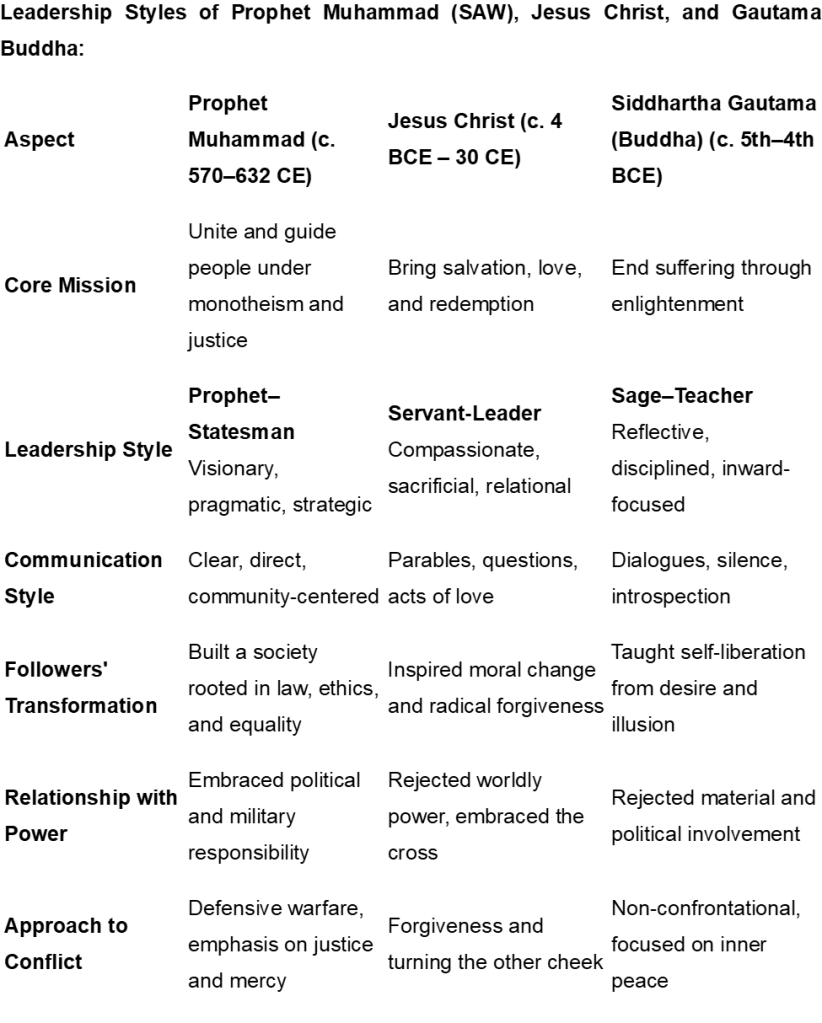
Common Traits of Their Leadership:
- Transformational Purpose: Each led people toward inner and outer transformation, not just social reform.
- Spiritual Authority: Their leadership was legitimized not by title or position, but by moral and spiritual authority.
- Service Over Self: Personal sacrifice was central — each gave up comfort, security, or life itself for their mission.
- Inclusiveness: They embraced marginalized people: the poor, the outcast, the seeker.
- Moral Courage: Stood against injustice, ignorance, or oppression even when it cost them dearly.
Sublime Leadership Embodied:
If we connect this to the concept of Sublime Leadership, these three figures embody it to the highest degree:
- Ethical depth (living their teachings)
- Transcendent vision (seeing a reality beyond the material world)
- Enduring impact (changing human history not through force, but through transformation)

 SUBLIME LEADERSHIP
Leave a comment